

LIPO, UNIDO Close Business Clinic as 39 Businesses, Cooperatives Receive IP Certificates
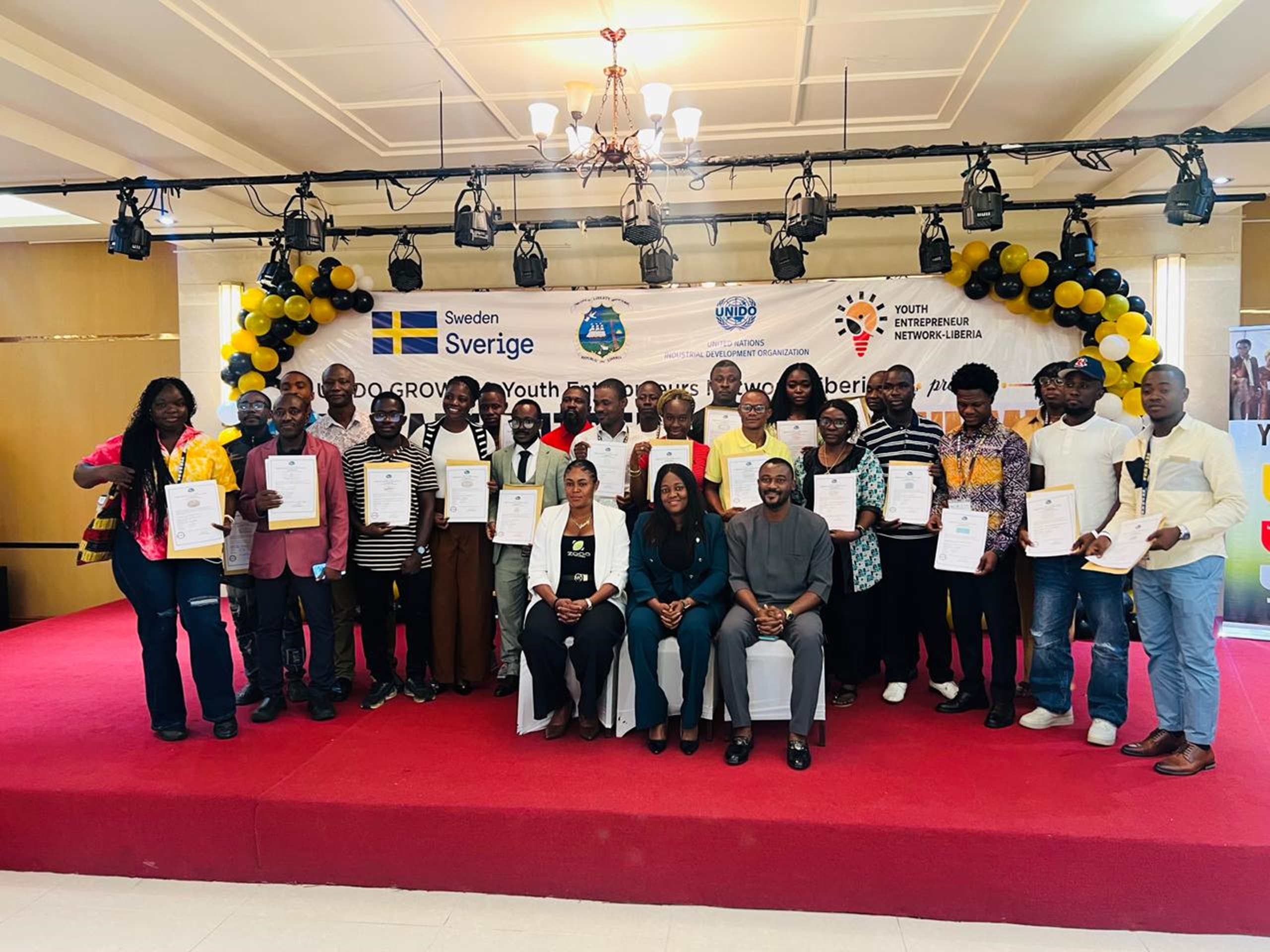
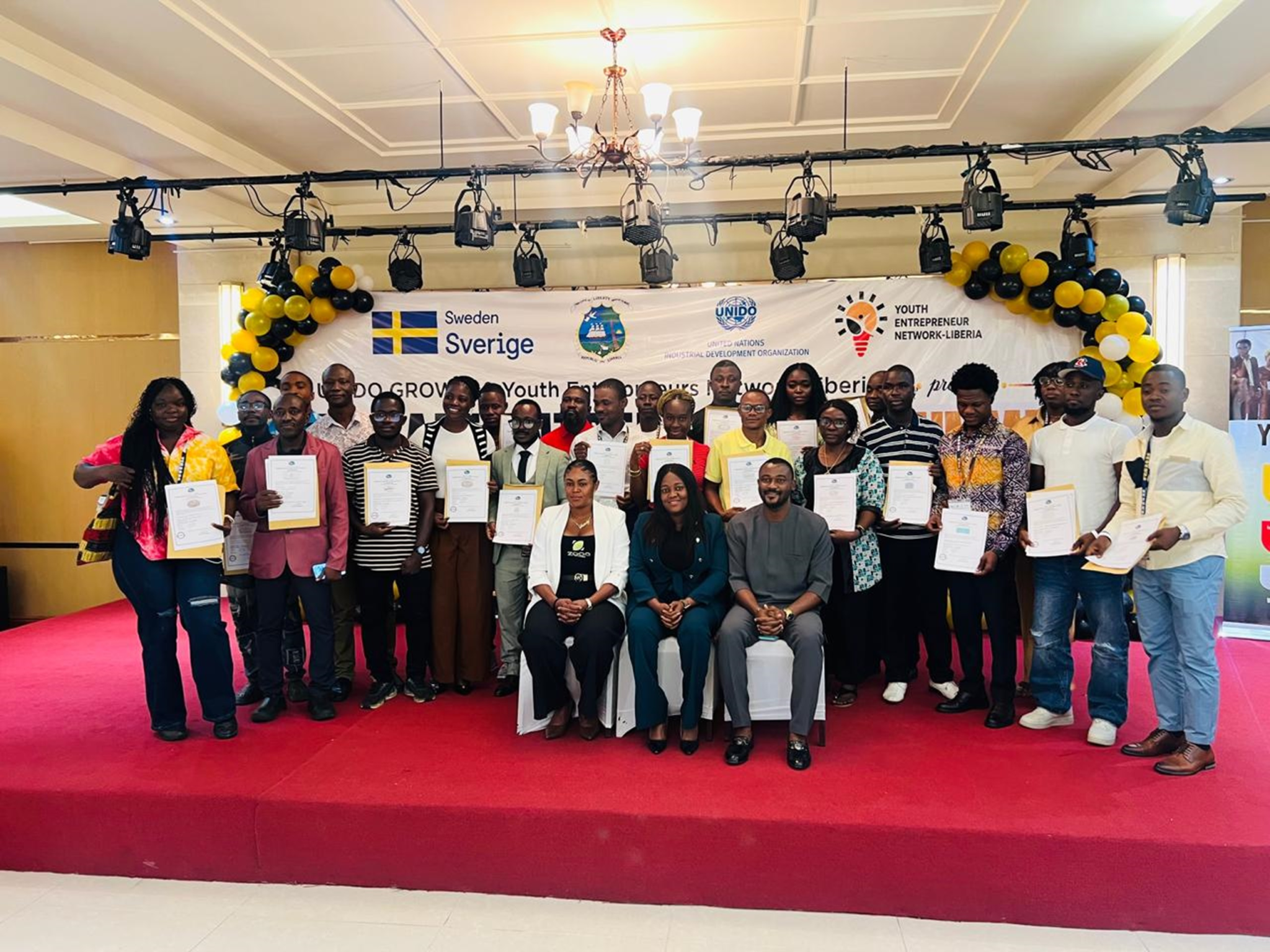
Monrovia, Liberia – August 19, 2026 The Government of Liberia, through the Liberia Intellectual Property Office (LIPO), in partnership with the United Nations Industrial Development Organization (UNIDO) through its GROW-2 Project, has concluded the Business and Intellectual Property Management Clinic (BIPMC), with 39 businesses and cooperatives securing intellectual property protection following a month-long intervention targeting micro, small and medium-sized enterprises (MSMEs) across four counties.
The initiative, implemented from June 1–23, 2026, reached 142 entrepreneurs in Lofa, Bong, Nimba and Margibi Counties, providing practical training in intellectual property identification and protection, branding, business management, marketing and the strategic use of intellectual property assets to strengthen enterprise competitiveness.
“Of the 142 MSMEs participating in the Clinic, 90 submitted applications for trademark and related mark registration, including 56 businesses operating within the agriculture and agro-processing sectors,” Hon. Jamus P. Bannah, LIPO’s Deputy Director General for Industrial Property, said in remarks at the project closing on August 11.
“Following administrative and substantive examination by LIPO, 41 applicants satisfied the requisite business-registration and documentation requirements for further processing,” Hon. Bannah noted. “Of that number, 39 applications were approved for registration, while two were refused following examination on grounds relating to similarity with existing marks.”
The results, the release said, mark an important step in the Government’s efforts to move Liberian MSMEs beyond production and informal trading toward formalization, protected branding, value addition and sustainable commercial growth.
The initiative supports the Government of Liberia’s ARREST Agenda for Inclusive Development, particularly Pillar 1 (Economic Transformation), under Program 7, Business Enabling Environment, which emphasizes the development of a robust national intellectual property ecosystem as part of creating an enabling environment for entrepreneurship, innovation, investment, employment and inclusive wealth creation.
According to Hon. Bannah, the project results show the practical role intellectual property can play in transforming local enterprises and strengthening Liberia’s private sector to develop, compete and grow.
“Our objective is to build enterprises that are not only producing but are properly positioned to compete. When an entrepreneur understands how to protect and manage their intellectual property assets, we are connecting creativity and enterprise development with jobs, investment and economic transformation,” Hon. Bannah added.
According to the release, trademark certificates were issued to individual businesses, while certification mark certificates were issued to cooperatives, allowing members to use a shared protected mark for goods or services produced under the cooperative, subject to the products meeting the standards and conditions established for its use.
Under Liberia’s 2016 Intellectual Property Law, trademark and certification mark registration gives businesses and cooperatives legal control over enterprise names, logos and other distinctive signs that identify their products in the marketplace, while reducing the risk of imitation.
The BIPMC Project, supported by UNIDO through its GROW-2 Project and the Government of Liberia, was launched as a pilot initiative to help start-ups and large enterprises identify, protect, manage and commercialize their intellectual property assets, while integrating their IP portfolios into broader business strategies and strengthening prudent business management practices.
In remarks at the project closing, participants noted that the Clinic had broadened entrepreneurs’ understanding of intellectual property and business management, considering that many were already producing viable products but had limited awareness of both.
According to the participants, in the past, they had focused largely on producing, selling and getting their products to customers, without realizing that the names and identities attached to those products were valuable business assets that could also be protected, commercialized and integrated into their broader business strategies.
“The training has given us a different way of looking at our businesses, as we now understand that protecting what identifies our products is also part of building the business and preparing it to grow,” the participants said. “The training helped us to understand that producing a good product alone is not enough; we also need to know how to protect the identity of that product and manage the business behind it. We learned about intellectual property, but we also learned how to think about branding, financial management and marketing, and how to position our businesses for growth. These are things we were doing without fully understanding how they connect.”
Speaking also, Mr. Dave Asa Newton, Senior National Value Chain Expert with UNIDO’s GROW-2 Project, noted that the Clinic achieved its overall goal of closing the knowledge gaps among county-based entrepreneurs by connecting intellectual property with the broader requirements of running a competitive enterprise.
Mr. Newton added that, from GROW-2’s experience, many MSMEs across Liberia have products with considerable market potential, but weaknesses in intellectual property asset management and market strategy can limit their ability to grow, making it necessary for intellectual property protection and business development to be addressed together rather than as separate issues.
“The success of this project highlights the shared vision of UNIDO, through its GROW-2 Project, which was funded by the Embassy of Sweden, and LIPO to enable MSMEs to leverage the full potential of intellectual property as a driver of innovation, sustainable economic growth and long-term development,” Mr. Newton said.
According to the registration record, Bong County recorded the highest number of trademark and certification mark registrations under the project, with 14, followed by Nimba with 12, Margibi with 8 and Lofa with 5.
The beneficiaries included Abraham Koilee Agriculture Corporation; Diompillor Farmers Corporation; Elite Organic Fruity; Ndaka Enterprise; Tayulu Farmers Cooperative; Bravo Sister Enterprise; Crabbe’s Crop; Creative Agriculture Wealth Builders of Liberia (CAWBOL); KEB Heritage Threads; Lucee’s Farm; Rescue Women Micro Agriculture Cooperative Society; Ruth Farm; Shinning Star Fabrication Shop; Alvino Hotel; and Center for Food and Agriculture Innovations (CFAI) Group.
Other beneficiaries were Healthy Go Liberia; Leanue & Son Cassava Processing; Liberia Farmers Development Corporation; Liberia Redimere Group of Companies; Liberia Rural Women Network Empowerment; Nenagap Supreme Household Detergents; Radio Kergheamahn; Smart Agro Venture; Angea Agro Hub; Jane’s Healthline Liberia; Geeta’s Restaurant and Catering Services; Henko; Jogima; Joyce Paye Business Center; Kaipakwagueh Multi-Purpose Agroculture Company (KAMA); and Korlah Daughters’ Business Center.
The remaining beneficiaries were Kukaju Multi Business; Lua Mutipurpose Cooperative; Nelpris Enterprises Limited; Own World Wholesale & Retail Drinks; Sua-Yelle Mutipurpose Corporation; United Women for Sustainable Development; Veco’s Wood Workshop; and Women of Substance.
Issued by:
Robin Dopoe
Communication and Outreach Officer
Liberia Intellectual Property Office
For more information, please contact:
LIPO Media Department
Email: dopoejr@gmail.com